How to Delete Google Reviews From Angry Customers
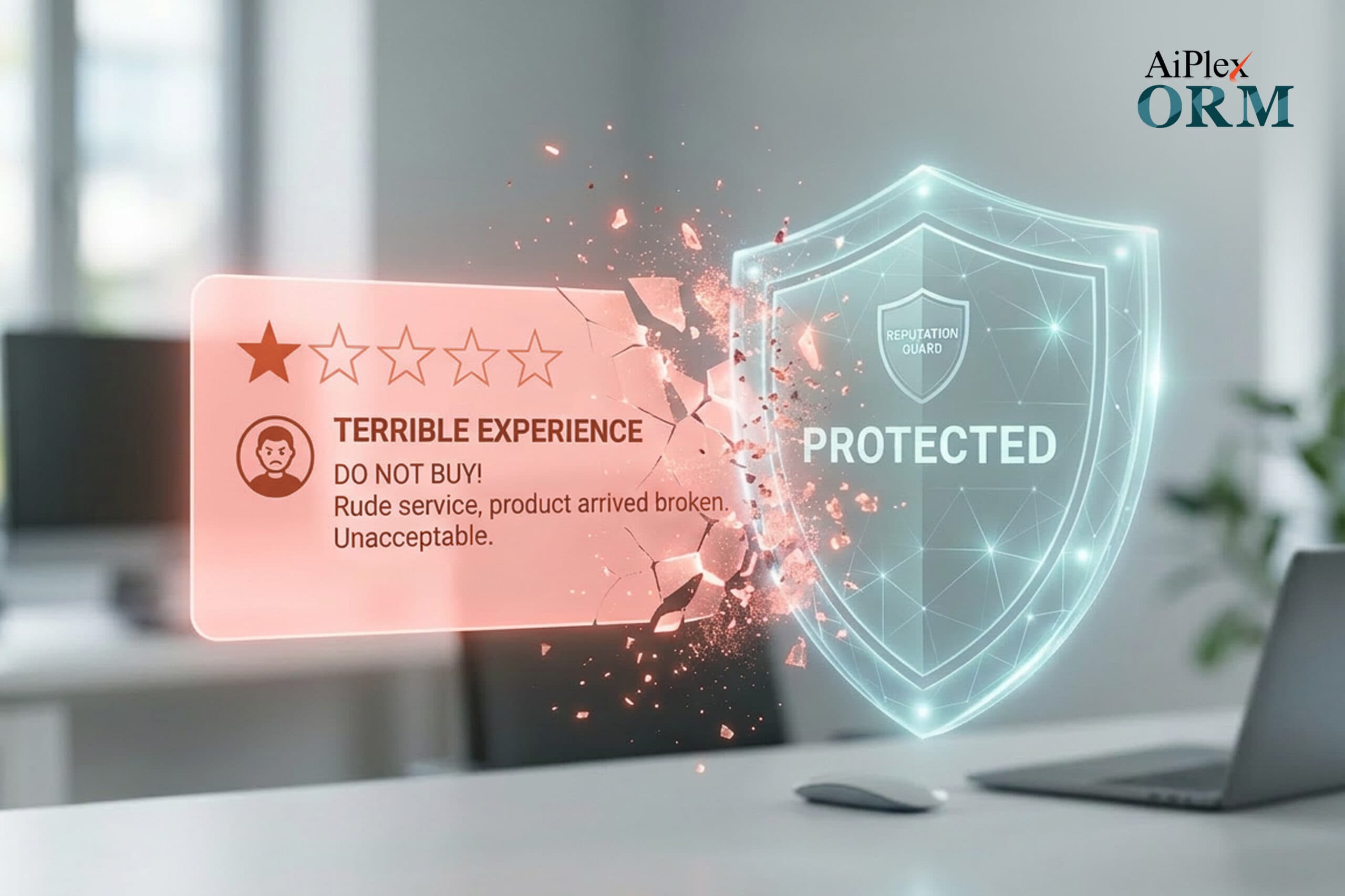
Table of Contents
How to Delete Google Reviews From Angry Customers
Introduction
Struggling with damaging feedback on your Google Business Profile? You’re not alone. Learning how to delete Google reviews—especially from angry or unreasonable customers—is essential for protecting your business reputation. Whether you manage a local café or a global brand, negative reviews can influence public perception and hurt your credibility.
This guide breaks down when and how reviews can be removed, what Google allows, and how to respond with professionalism. If you’re tired of unfair reviews lingering online, you’ll learn real strategies to deal with them effectively. Let’s explore your best path forward—and how AiPlex ORM can help you delete Google reviews that shouldn’t be there.
What to Know Before You Delete Google Reviews
Before you can take action, understand Google’s review policy. Not every bad review qualifies for removal, even if it feels unfair. Knowing what violates content guidelines helps set realistic expectations.
Google’s Review Guidelines
Google allows users to share honest opinions. However, reviews that include hate speech, spam, fake content, or impersonation clearly violate their policy—and these can be deleted. Learn to spot violations that make reviews eligible for removal.
When a Review Can Be Deleted
If a review is fake, inappropriate, or misleading—such as one from a competitor pretending to be a customer—it can be flagged for deletion. Emotional but honest complaints generally remain.
Business Owner Limitations
You cannot directly delete Google reviews as a business owner. You can only flag them, respond publicly, or escalate through Google Business Profile support. That’s why services like AiPlex ORM exist: to guide and support businesses through the takedown process.
Speed Matters
Timely responses can de-escalate situations. Often, a quick, respectful reply will lead the reviewer to edit or even delete their own feedback.
Google’s Verification Process
Flagged reviews are reviewed by a combination of AI tools and human moderators. Providing screenshots, links, and policy references increases your chance of having the review deleted.
Steps to Delete Google Reviews From Angry Customers
1. Identify the Offending Review
Carefully evaluate the review. Is it fake, threatening, or abusive? Or just harsh criticism? Only policy-violating reviews can be removed by Google.
2. Flag the Review
If it violates policy, go to your Google Business Profile, click the three-dot menu next to the review, and select “Flag as inappropriate.” Clearly explain the violation in your report.
3. Respond Publicly and Calmly
Even if deletion isn’t possible, respond in a professional tone. Thank the reviewer, clarify the issue, and show willingness to resolve. This may prompt a revision or removal.
4. Escalate Through Support
If flagging fails, contact Google Business Profile Support directly. Chat or request a callback. Provide strong evidence and clear reasoning.
5. Legal Action (If Necessary)
If the review is defamatory and provably false, consult legal experts. Court orders can force Google to delete such reviews—but this is often a last resort.
Why Some Google Reviews Stay Online
They Follow Google’s Guidelines
Negative but honest reviews typically stay, even if they’re harsh. Instead of seeking deletion, respond with professionalism.
Anonymity Isn’t a Violation
Reviewers aren’t required to verify identities. Unless the content itself violates policy, anonymous reviews won’t be deleted.
Manual Review Is Limited
With millions of daily submissions, Google can’t investigate every flagged review deeply. Clear documentation improves your chances, but it’s not guaranteed.
Alternative Ways to Offset Negative Google Reviews
1. Generate Positive Feedback
Encourage satisfied clients to post honest feedback. A high volume of positive reviews naturally improves your rating.
2. Use Review Management Tools
Platforms like AiPlex ORM help monitor, flag, and respond to reviews. Their AI can detect fake patterns and recommend fast action.
3. Respond Thoughtfully to Criticism
Always reply to angry reviews politely. Show that you listen and care—even if the issue can’t be fixed.
4. Ask for Review Updates
After resolving a complaint, reach out and ask the customer to update their review. Many are willing to do so when treated fairly.
5. Push Down Negative Search Results
Publish blog posts, positive press, and social content to shift focus away from bad reviews. AiPlex ORM offers content suppression tools for this.
Why Trust AiPlex ORM to Help Delete Google Reviews
AiPlex ORM specializes in review management. With 24/7 monitoring, content takedown workflows, and legal support, they provide the complete solution to delete Google reviews that damage your brand unfairly.
Trusted by global brands, their team combines technology and legal expertise to deliver fast, ethical results. Whether it’s reputation recovery or real-time review suppression, AiPlex helps businesses stay ahead.
Conclusion
It’s not always possible to delete Google reviews. But with the right strategy, you can reduce their impact and sometimes get them removed. Whether it’s through Google’s flagging system, escalation, or support from review management pros like AiPlex ORM, you have options.
Don’t let one angry customer shape how the world sees your business. Learn the process, act quickly, and stay professional. Your reputation is worth protecting.
FAQs
Can I delete Google reviews myself?
No. Only Google can remove reviews that break its content policy.
How long does it take Google to review a flagged post?
Anywhere from a few days to a couple of weeks, depending on the case.
Can I remove reviews from competitors?
Yes, if you can prove they’re fake or violate Google’s policies.
What if the review doesn’t break any rules?
Respond calmly and try to encourage the reviewer to reconsider or edit it.
Does flagging always work?
No. That’s why documentation and follow-up through Google Support matter.
Should I hire a service like AiPlex ORM?
Yes, especially if your brand is seeing repeated fake or abusive reviews.
Do ORM services offer legal help?
Many, like AiPlex, work with legal professionals to support defamation claims.
Can I ask customers for reviews legally?
Yes—just avoid offering rewards in exchange for specific ratings.
Do fake reviews affect Google rankings?
They can. More positive, genuine reviews improve local visibility.
Is responding to reviews really important?
Absolutely. Public responses show professionalism and build customer trust.
Share this Article


OUR RECENT POSTS

Advanced Online Brand Monitoring for Business Growth
A single customer review, social media post, forum discussion, or news mention can influence how people perceive a business. Brand reputation is no longer shaped only by advertising campaigns or official company statements. Instead, it is continuously affected by conversations happening across websites, social platforms, review portals, blogs, and online communities. Businesses that actively track
AI Admin
|03/06/2026
|1 min read

Social Listening Services for Brands That Protect Your Brand
Every brand leaves a trail of conversations across social media platforms, review websites, forums, blogs, and online communities. Customers discuss their experiences, competitors compare offerings, influencers share opinions, and industry trends evolve rapidly. While many businesses focus heavily on publishing content and running campaigns, the real value often lies in understanding what people are already
AI Admin
|02/06/2026
|1 min read
Unauthorized Use of Brand Name Removal Services
A business can spend years building a trusted brand identity, only to discover that another website, seller, or online entity is using the same brand name without authorization. This misuse can damage customer trust, create confusion in the market, and divert valuable traffic away from the original business. Companies dealing with counterfeit products, fake social
AI Admin
|01/06/2026
|1 min read

Brand Protection Company India for Online Security
A single counterfeit listing, fake social media page, or pirated marketplace profile can weaken years of brand-building efforts within weeks. Businesses across industries are investing heavily in digital marketing, influencer partnerships, and online expansion, yet many overlook the growing risks connected to unauthorized sellers, trademark misuse, and digital impersonation. This is exactly why the search
AI Admin
|31/05/2026
|1 min read
Trademark Enforcement Online for Brand Safety
A counterfeit listing can appear on a marketplace within minutes, but the damage it creates often lasts much longer. Businesses spend years building trust, customer loyalty, and recognition, only to watch fake sellers misuse logos, copy product descriptions, and mislead buyers through unauthorized online stores. This growing challenge has made trademark enforcement online an essential
AI Admin
|30/05/2026
|1 min read

GET STARTED TODAY...
Speak to a strategist today and see why brands rate AiPlex among the best online reputation management company options for India and global markets.
GET STARTED TODAY...
Speak to a strategist today and see why brands rate AiPlex among the best online reputation management company options for India and global markets.
TOP FAQs
Hiring an online reputation expert is crucial because your digital presence directly impacts customer trust, sales, and business opportunities. In today’s competitive market, even a single negative review or misleading article can harm your brand’s credibility. Experts use strategies like proactive monitoring, removing harmful content, improving ratings, and highlighting positive reviews to protect your reputation. They also create SEO-driven campaigns that promote trust-building content. By working with an expert, you not only protect your brand from damage but also gain a stronger, long-term positive image that drives customer loyalty, conversions, and growth.
An online reputation expert helps individuals and businesses manage, repair, and improve how they are perceived online. They monitor search results, social media, and review platforms to identify harmful or misleading content. By using proven strategies like content creation, review management, SEO, and digital PR, these experts push down negative content and highlight positive aspects. They also guide businesses in handling customer complaints and building trust with their target audience. In short, an online reputation expert ensures that your digital presence reflects credibility, reliability, and professionalism while safeguarding your brand from online risks.
Improving online reputation is not an overnight process; it requires consistent effort and strategy. Depending on the severity of negative content and the competitiveness of your industry, results may take anywhere from a few weeks to several months. Reputation companies work on search engine optimization, review management, and content publishing to gradually shift online perception. Quick wins may come from review responses or social media engagement, but lasting improvement usually requires 3–6 months or more. Patience, persistence, and collaboration with a professional reputation company ensure long-term credibility, trust, and resilience against future digital challenges.
Reputation companies cannot always directly remove harmful or false content, especially if it is on independent third-party websites. However, they use multiple methods to minimize its impact. These include contacting platforms for content removal when it violates policies, pushing down negative search results through SEO tactics, and publishing positive, authoritative content to rebuild credibility. In cases of defamation or illegal content, reputation companies may collaborate with legal experts for takedown notices. While not all harmful content disappears, strategic suppression ensures it becomes less visible and less influential over time, effectively protecting your online image and trustworthiness.
Negative reviews can harm business credibility if not addressed properly. A reputation company uses multiple strategies to manage such situations. First, they monitor review platforms to respond promptly and professionally, turning negative experiences into opportunities for improvement. Second, they encourage genuine satisfied customers to leave positive reviews, which balances the overall perception. Third, they apply SEO-driven content creation to push down harmful results from search engines. Finally, they provide businesses with tools and training to handle feedback constructively. This proactive approach helps reduce the long-term impact of negativity and builds a reputation of transparency and customer care.
Online reputation management is vital because people rely heavily on digital platforms before making decisions. A single negative review or news article can impact customer trust and sales. For businesses, reputation influences brand image, hiring opportunities, and partnerships. Individuals, such as professionals or public figures, also face risks when inaccurate or damaging content spreads online. A reputation company ensures that authentic, positive content ranks higher, overshadowing any negativity. It helps maintain credibility, improves customer loyalty, and even supports search engine rankings. Simply put, reputation management safeguards both professional and personal growth in the competitive digital landscape.
A reputation company specializes in managing how individuals, brands, or businesses are perceived online. Their main goal is to highlight positive content while reducing the visibility of negative or misleading information. They monitor search engines, social media, review sites, and forums to ensure your digital presence remains trustworthy. These companies often use strategies like search engine optimization (SEO), online public relations, review management, and crisis response. By controlling the narrative, they help protect credibility, attract more customers, and maintain long-term trust. In today’s digital-first world, hiring a reputation company can be critical for success.
Customer trust is built through transparency, responsiveness, and consistent positive experiences. ORM tools play a vital role in this process by giving businesses the ability to track feedback in real time and respond to concerns quickly. When customers see that a brand acknowledges issues and provides solutions, it increases trust and loyalty. ORM tools also help highlight positive testimonials, case studies, and reviews across multiple channels, reinforcing credibility. By actively engaging with audiences online, businesses can create stronger connections, improve customer satisfaction, and turn loyal clients into advocates. Thus, ORM tools directly impact trust and engagement.
Yes, ORM tools are not limited to large corporations—they are equally beneficial for small and medium businesses (SMBs). In fact, SMBs may be more vulnerable to reputation damage since even a single negative review can significantly affect their local market. ORM tools help SMBs monitor customer feedback, respond promptly, and showcase positive experiences. They provide affordable solutions to manage online presence, ensuring that smaller brands remain competitive. By improving visibility, credibility, and trust, ORM tools enable SMBs to strengthen relationships with customers and build long-term brand loyalty without requiring huge marketing budgets.
When choosing ORM tools, businesses should consider several key features. First, real-time monitoring is crucial to detect issues instantly. Sentiment analysis helps understand customer emotions behind reviews and comments. Multi-platform integration ensures coverage across social media, forums, blogs, and review portals. Reporting and analytics provide measurable insights for reputation strategies. Some advanced ORM tools even offer competitor benchmarking and crisis alerts. Additionally, easy-to-use dashboards and automated responses can save time for teams. Selecting tools with these features ensures comprehensive reputation management and helps businesses stay ahead of potential online crises.
ORM tools function by continuously monitoring digital platforms for any mention of your brand name, products, or services. Once detected, they analyze whether the mention is positive, negative, or neutral. These tools provide actionable insights, allowing businesses to respond appropriately. For instance, a negative review can be addressed through prompt customer support, while positive mentions can be amplified for marketing. Many ORM tools also include features like sentiment analysis, competitor tracking, and reporting dashboards. By proactively identifying potential threats and promoting positive content, ORM tools safeguard a business’s reputation across the web.
ORM tools, short for Online Reputation Management tools, are specialized software solutions that help businesses track, monitor, and manage their online presence. They scan multiple platforms such as social media, search engines, and review sites to identify brand mentions, customer feedback, and potential reputation risks. Businesses need ORM tools because a single negative review or misleading comment can impact customer trust and sales. With the right tools, organizations can respond quickly, build credibility, and maintain a positive image. In today’s competitive market, ORM tools are essential for reputation protection and brand growth.