How to conduct an online review for your company?
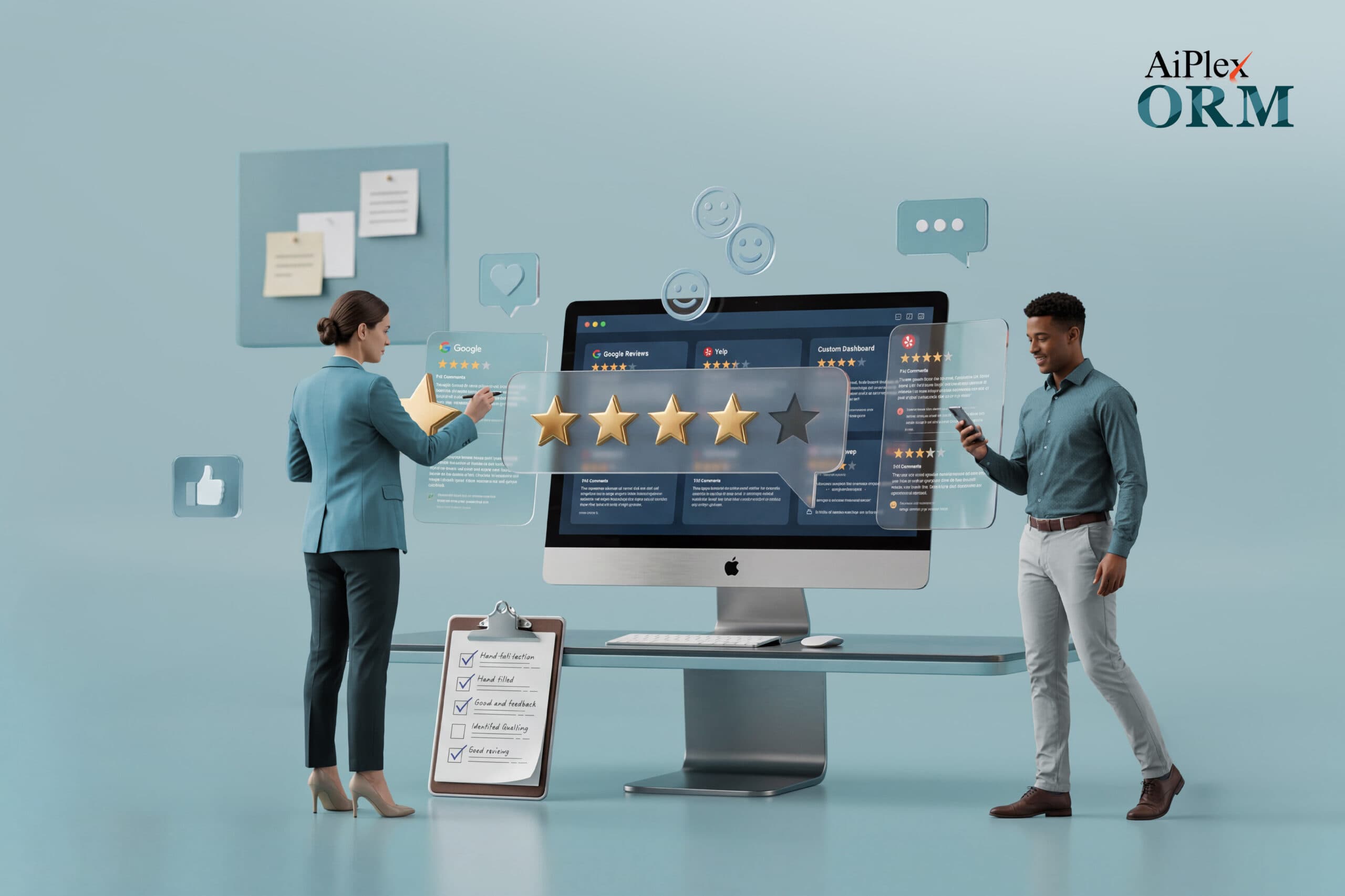
Table of Contents
How to conduct an online review for your company?
Introduction
In today’s digital-first world, your company’s reputation can be shaped by what customers say about you online. Whether it’s on Google, Yelp, or social media platforms, an online review often forms the first impression for potential clients. Companies that actively monitor and conduct online reviews gain insights into their strengths and areas of improvement. Just one positive or negative review can sway customer trust, making it vital to understand how reviews work and how to use them effectively.
Conducting online reviews for your company isn’t just about gathering customer feedback—it’s about shaping brand perception, building credibility, and improving customer experience. This blog will guide you through the essential steps to conduct online reviews, the factors to consider before starting, and strategies to manage the process effectively. By the end, you’ll see how Aiplex ORM can support your business in ensuring your online reputation reflects your true value. Explore our ORM solutions here.
Things to know before conducting an online review for your company
Before diving into review collection and management, it’s crucial to understand a few fundamentals. Online reviews are more than just customer comments; they impact SEO rankings, influence customer behavior, and directly affect your revenue. Knowing the right approach helps ensure your company benefits from reviews rather than being hurt by them.
Importance of customer feedback in online reviews
- Customer feedback is the backbone of every online review process. When customers share their experiences, they provide valuable insights that businesses can use to enhance products or services. By treating each review as an opportunity for growth, you not only acknowledge your customers’ voices but also foster trust and loyalty.
- Moreover, customer feedback allows you to identify trends and recurring issues. For example, if multiple customers point out slow service, it’s a clear indicator for operational improvement. Companies that respond constructively to this feedback often see higher customer satisfaction scores and stronger long-term relationships.
Role of online reviews in brand reputation
- Your company’s reputation is one of its most valuable assets, and online reviews play a central role in shaping it. Positive reviews can boost your credibility and attract new customers, while negative ones can damage trust if not managed properly. Consistently high ratings create a strong first impression and help set you apart from competitors.
- On the other hand, ignoring online reviews can lead to missed opportunities and unchecked reputational risks. When businesses acknowledge both positive and negative feedback with professionalism, they demonstrate accountability and commitment to customer satisfaction—two qualities that strengthen brand reputation.
Impact of online reviews on SEO ranking
- Search engines like Google prioritize businesses with strong engagement and positive customer feedback. Online reviews act as social proof, signaling to search engines that your company is trustworthy and relevant. The more positive reviews your business receives, the higher your chances of ranking well in search results.
- Additionally, reviews often include keywords naturally used by customers, which can further boost your SEO. For example, if customers frequently mention “fast delivery” or “excellent customer service,” those terms help your business appear in relevant search queries, driving organic traffic to your website.
Legal and ethical considerations in online reviews
- Conducting online reviews must be done ethically and transparently. Fabricating reviews or incentivizing only positive ones can backfire and harm your brand’s credibility. Platforms like Google and Yelp have strict guidelines, and violating them can lead to penalties or removal of reviews.
- Ethical practices include encouraging all types of reviews, being transparent in your request for feedback, and ensuring customer privacy is respected. Companies that maintain integrity in their review processes build stronger, more authentic relationships with their audience.
Choosing the right online review platforms
- Not all online review platforms are created equal. While Google Reviews is essential for local SEO, industry-specific platforms like TripAdvisor, Yelp, or Trustpilot might be more relevant depending on your business. Selecting the right platform ensures your reviews reach the right audience.
- It’s also wise to focus on platforms where your target customers spend time. For instance, B2B businesses may benefit more from LinkedIn recommendations, while e-commerce stores should prioritize product reviews on marketplaces like Amazon. Strategic platform selection maximizes the impact of your online review strategy.
Steps to conduct an online review for your company
Step 1: Set clear objectives for online reviews
- Before starting, define what you want to achieve from online reviews. Objectives could include improving brand reputation, gaining customer insights, boosting SEO, or increasing conversion rates. Clarity ensures that your review strategy aligns with your overall business goals.
- Having clear objectives also helps measure success. For example, if your goal is to enhance customer experience, track review sentiments and response times. If it’s about SEO, monitor changes in search rankings correlated with review activity.
Step 2: Encourage customers to leave reviews
- Many satisfied customers don’t leave reviews simply because they weren’t asked. Encouraging feedback through follow-up emails, in-store signage, or website pop-ups can significantly increase review volume. Make the process simple and convenient for your customers.
- It’s also important to time your requests well. Ask for feedback soon after a purchase or service experience when the customer’s impression is still fresh. This ensures more detailed and authentic reviews.
Step 3: Monitor online reviews regularly
- Active monitoring is crucial to keep track of customer sentiment and address issues promptly. Use online reputation management tools to consolidate reviews across platforms, making it easier to track trends and respond effectively.
- Regular monitoring also helps identify potential PR crises early. For example, spotting a sudden surge of negative reviews allows your team to investigate and resolve issues before they escalate into larger reputational challenges.
Step 4: Respond to reviews professionally
- How you respond to online reviews says a lot about your company’s values. Acknowledging positive reviews with gratitude reinforces customer loyalty, while addressing negative ones with empathy shows accountability. Every response should reflect professionalism and respect.
- Timely responses matter too. Customers appreciate when their concerns are addressed quickly, which can turn a negative experience into a positive one. This proactive approach demonstrates that your company values customer feedback.
Step 5: Analyze reviews for actionable insights
- Beyond surface-level feedback, reviews contain data that can drive business improvements. Use text analysis tools to identify common themes, sentiment trends, and frequently mentioned keywords. These insights can inform product development, customer service training, and marketing strategies.
- When companies take visible action based on customer reviews, it not only improves internal processes but also strengthens customer trust. People are more likely to leave reviews when they see that businesses genuinely value their feedback.
Why choose Aiplex ORM for online review management?
- Managing online reviews can be overwhelming, especially when dealing with multiple platforms and large volumes of feedback. Aiplex ORM offers comprehensive solutions that simplify review management while enhancing your brand reputation. With expertise in reputation monitoring, sentiment analysis, and response strategies, Aiplex ensures that your company’s online presence reflects its true strengths.
- Aiplex ORM also helps businesses navigate negative reviews effectively, turning potential setbacks into opportunities for growth. By combining advanced technology with strategic consulting, Aiplex empowers companies to build credibility, improve customer satisfaction, and stay ahead in competitive markets. Discover how Aiplex ORM can transform your review management.
Conclusion
- Online reviews are no longer optional—they are a critical part of modern business strategy. From influencing customer decisions to impacting SEO, reviews hold the power to shape your company’s growth trajectory. Conducting online reviews the right way involves setting clear objectives, encouraging feedback, monitoring consistently, responding professionally, and analyzing insights for continuous improvement.
- Partnering with experts like Aiplex ORM ensures that your review management process is efficient, ethical, and impactful. With the right strategy in place, your company can harness the power of online reviews to strengthen brand reputation, foster customer trust, and drive sustainable growth.
Summary
To conduct an effective online review process for your company, start by understanding its importance in customer feedback, brand reputation, and SEO. Choose the right platforms, encourage customers to leave reviews, and monitor them consistently. Respond professionally and use insights to improve services. Managing this process alone can be challenging, which is why Aiplex ORM offers expert solutions to simplify and optimize review management. By choosing Aiplex ORM, you ensure your company not only collects reviews but also leverages them to strengthen credibility and growth in the digital landscape.
Share this Article


OUR RECENT POSTS

Advanced Online Brand Monitoring for Business Growth
A single customer review, social media post, forum discussion, or news mention can influence how people perceive a business. Brand reputation is no longer shaped only by advertising campaigns or official company statements. Instead, it is continuously affected by conversations happening across websites, social platforms, review portals, blogs, and online communities. Businesses that actively track
AI Admin
|03/06/2026
|1 min read

Social Listening Services for Brands That Protect Your Brand
Every brand leaves a trail of conversations across social media platforms, review websites, forums, blogs, and online communities. Customers discuss their experiences, competitors compare offerings, influencers share opinions, and industry trends evolve rapidly. While many businesses focus heavily on publishing content and running campaigns, the real value often lies in understanding what people are already
AI Admin
|02/06/2026
|1 min read
Unauthorized Use of Brand Name Removal Services
A business can spend years building a trusted brand identity, only to discover that another website, seller, or online entity is using the same brand name without authorization. This misuse can damage customer trust, create confusion in the market, and divert valuable traffic away from the original business. Companies dealing with counterfeit products, fake social
AI Admin
|01/06/2026
|1 min read

Brand Protection Company India for Online Security
A single counterfeit listing, fake social media page, or pirated marketplace profile can weaken years of brand-building efforts within weeks. Businesses across industries are investing heavily in digital marketing, influencer partnerships, and online expansion, yet many overlook the growing risks connected to unauthorized sellers, trademark misuse, and digital impersonation. This is exactly why the search
AI Admin
|31/05/2026
|1 min read

Trademark Enforcement Online for Brand Safety
A counterfeit listing can appear on a marketplace within minutes, but the damage it creates often lasts much longer. Businesses spend years building trust, customer loyalty, and recognition, only to watch fake sellers misuse logos, copy product descriptions, and mislead buyers through unauthorized online stores. This growing challenge has made trademark enforcement online an essential
AI Admin
|30/05/2026
|1 min read

GET STARTED TODAY...
Speak to a strategist today and see why brands rate AiPlex among the best online reputation management company options for India and global markets.
GET STARTED TODAY...
Speak to a strategist today and see why brands rate AiPlex among the best online reputation management company options for India and global markets.
TOP FAQs
Repairing your online reputation involves a strategic approach that includes assessing your current digital presence, addressing negative content, and building a positive image. Begin by searching for your brand online to identify damaging reviews or comments. Respond professionally and authentically to negative feedback to show accountability. Improve your online presence by sharing positive content like testimonials, blogs, or success stories. Regularly monitor your online mentions and use reputation management tools to stay proactive. If the task seems overwhelming, consider hiring professionals who specialize in online reputation management to help restore your brand’s trust and credibility effectively. Consistent effort over time is key to lasting repair.
Google Reviews Management involves monitoring, responding to, and optimizing customer reviews on your Google Business Profile. It is crucial because Google reviews act as social proof, helping potential customers trust your business. Positive reviews increase your brand’s credibility, improve local SEO rankings, and can directly boost conversions and sales. Managing reviews also means addressing negative feedback promptly and professionally, turning potential negatives into positives. This active engagement signals to Google and customers that you value feedback and care about customer experience, giving your business a competitive edge in search results and reputation
An ORM company specializes in managing, monitoring, and improving your business’s online reputation across digital platforms such as search engines, social media, review sites, and news articles. They use a combination of strategies like content creation, review management, SEO, crisis response, and brand monitoring to ensure that negative content is suppressed and positive content is highlighted. By maintaining a favorable online image, ORM services help protect your brand from damage, increase customer trust, and enhance your business’s credibility—ultimately supporting lead generation, sales growth, and long-term success in a competitive digital landscape
Measuring social media branding success involves tracking both quantitative and qualitative metrics. Quantitative metrics include follower growth, engagement rates (likes, comments, shares), reach, impressions, website traffic, and conversions. Qualitative insights assess brand perception, audience sentiment, and customer feedback. Tools like Google Analytics, social media analytics dashboards, and social listening platforms help monitor performance. Regularly analyzing these metrics allows businesses to adjust their branding strategies, optimize content, and ensure alignment with goals. By continuously refining social media branding efforts, companies can maximize impact, build stronger connections, and achieve sustainable growth.
An effective social media brand consists of several core elements: a clear brand voice, consistent visual identity, engaging content, and defined audience targeting. The brand voice should reflect your company’s personality, values, and mission. Visual identity includes logos, color schemes, and design templates that make posts instantly recognizable. Content should provide value, educate, entertain, or inspire followers. Regular interaction, responding to comments, and monitoring trends enhance engagement. Combining these elements helps establish credibility, strengthens customer relationships, and ensures that your social media presence leaves a lasting impression on your audience.
The best platforms for social media branding depend on your target audience and business goals. Instagram and TikTok are ideal for visually appealing and creative content, reaching younger demographics. LinkedIn works best for B2B branding, showcasing expertise, and professional networking. Facebook remains strong for community building and advertising, while Twitter is effective for real-time updates and thought leadership. Consistency across all chosen platforms is key—ensuring your logo, tone, colors, and messaging align. A well-planned platform strategy allows brands to maximize visibility, engagement, and long-term growth across social media.
Social media branding boosts visibility by creating a cohesive and recognizable presence that users can quickly identify. Consistent visuals, messaging, and posting schedules make it easier for audiences to remember and engage with your brand. By leveraging popular platforms like Instagram, LinkedIn, Facebook, and Twitter, brands can reach a wider audience, attract followers, and encourage sharing of content. Engaging posts, creative campaigns, and strategic hashtags amplify your reach. Over time, strong social media branding increases brand awareness, drives traffic to your website, and positions your business as a trusted authority in your industry.
Social media branding refers to the strategic process of creating a consistent and recognizable identity for your business across social media platforms. It includes using consistent logos, colors, messaging, and content styles that reflect your brand’s personality. Effective social media branding helps businesses stand out in crowded digital spaces, attract and retain customers, and build trust. By establishing a recognizable presence, companies can communicate their values, increase engagement, and create emotional connections with their audience, ultimately leading to better brand loyalty and increased sales.
Reputation is one of the most valuable intangible assets for any organization. ORM services provide continuous monitoring, content creation, and review engagement to maintain a credible public image. By strategically highlighting achievements and addressing concerns, ORM builds customer trust and loyalty. Over time, this drives higher conversions, strengthens brand positioning, and creates resilience during crises. Moreover, companies with strong reputations attract better employees, investors, and partners. Effective ORM ensures sustainable visibility, keeps businesses competitive, and empowers decision-makers with insights into how their brand is perceived in the digital landscape.
Businesses often face challenges such as fake reviews, negative media coverage, impersonation attacks, or competitor-driven defamation campaigns. ORM services provide solutions by removing harmful content legally, responding professionally to criticism, and ensuring positive stories rank higher on Google and other platforms. They help regulate inconsistent branding across social channels, address misinformation, and repair reputational harm caused by crises. Whether it’s reducing the impact of defamatory blogs or highlighting strong testimonials, ORM services create a healthier online narrative. This translates into improved customer trust, better recruitment prospects, and stronger overall brand perception.
ORM services are essential for businesses, brands, and individuals alike. Companies depend on customer reviews, social proof, and digital visibility to drive success. A single negative article or viral complaint can damage sales and client trust. Startups, celebrities, entrepreneurs, and executives also rely on ORM to maintain credibility and attractiveness to investors or partners. Industries like hospitality, healthcare, finance, and e-commerce are particularly sensitive. Professionals and businesses with high competition or public visibility benefit greatly from ORM services, ensuring their first impression online remains positive and free from misleading or outdated content.
ORM services involve a mix of monitoring, analysis, and action. The process begins with tracking brand mentions, reviews, and search engine results. Once risks or negative items are identified, strategies such as pushing positive content, publishing official press releases, launching review management campaigns, and using SEO techniques are applied. ORM professionals also address false claims with legitimate takedown requests. Over time, the negative impact of unwanted content decreases as positive narratives take priority in search and social visibility. This integrated approach helps businesses showcase strengths while building trust with their target audience.